Polar Bear GeothermalDesign–build · Toronto 647-914-8114

Residential · GTA & Southern Ontario

The house decides. The lot decides. We do not sell you a catalogue.

Most geothermal websites in this market lead with a lifestyle photo and a form. This page is for the owner who wants to know whether the ground under their property can actually heat the house — and who is answerable if it cannot.

The line is answered 24 hours a day by an automated assistant that books a real site visit. It is not a technician at 2am, and we will not pretend it is.

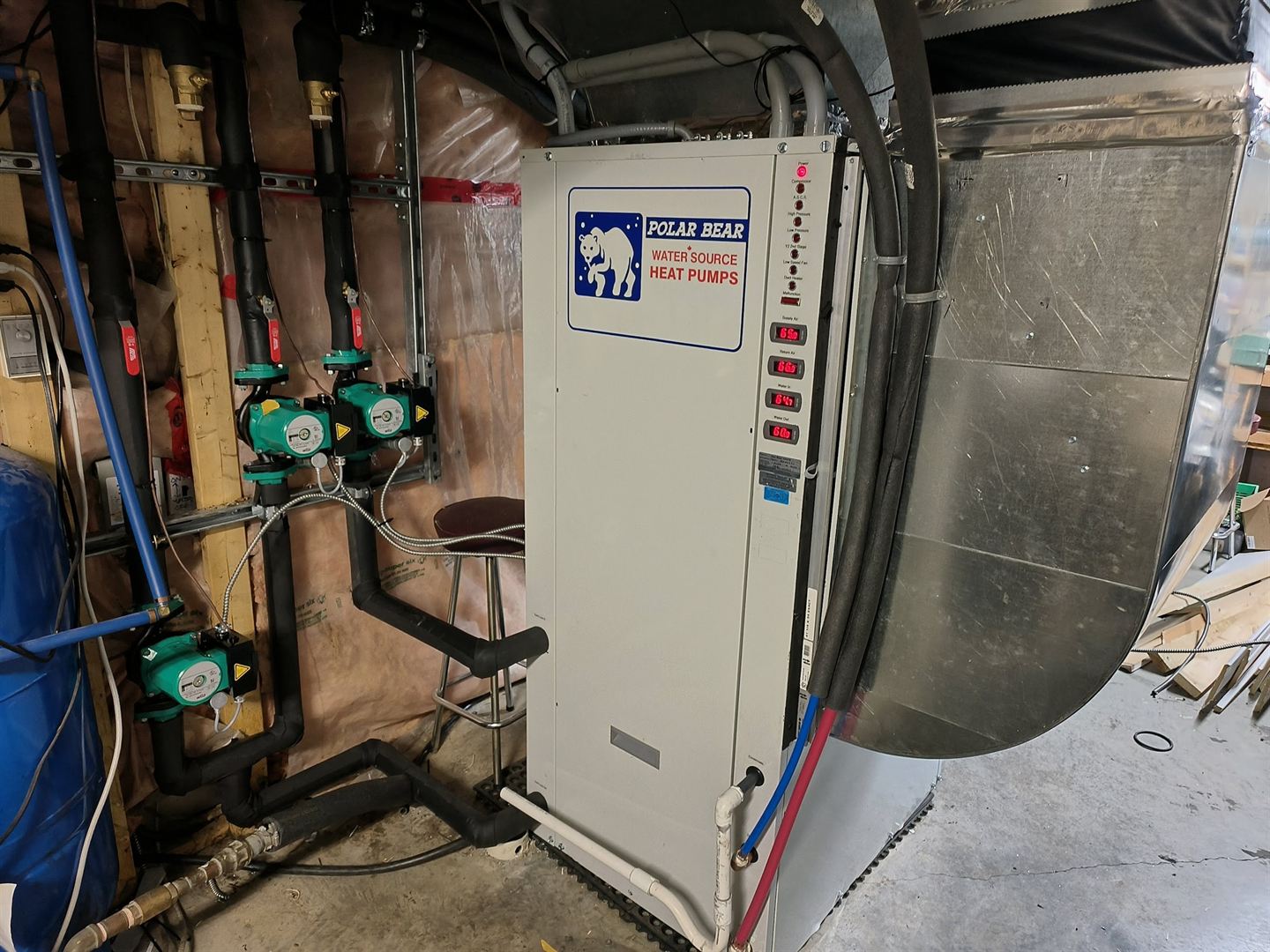
A Polar Bear water source heat pump installed in a finished basement mechanical space, piped and running.
The outdoor unit is not missing. There is not one. The machine lives inside.

Who this is for

Off the gas line, this stops being a green decision.

Rural, lakefront and estate houses on propane, oil or electric resistance are most of the residential work. On a gas main, geothermal usually costs more to run than the furnace you already have — we say that on the first visit, not after a deposit.

Custom and retrofit homes

Existing ductwork, an old mechanical room, a house that was never designed for a heat pump. We size to the heat loss, not the square footage. A leaky 1960s side-split and a tight 2015 build of the same size are two different jobs.

Lakefront and cottage country

If the water is deep enough, a closed lake loop is often the least destructive option — coils sunk, one trench up the bank, nothing taken from the lake. Ontario sets a 2 m minimum depth for submerged closed loops. The lake is evaluated, not assumed.

Tight urban lots

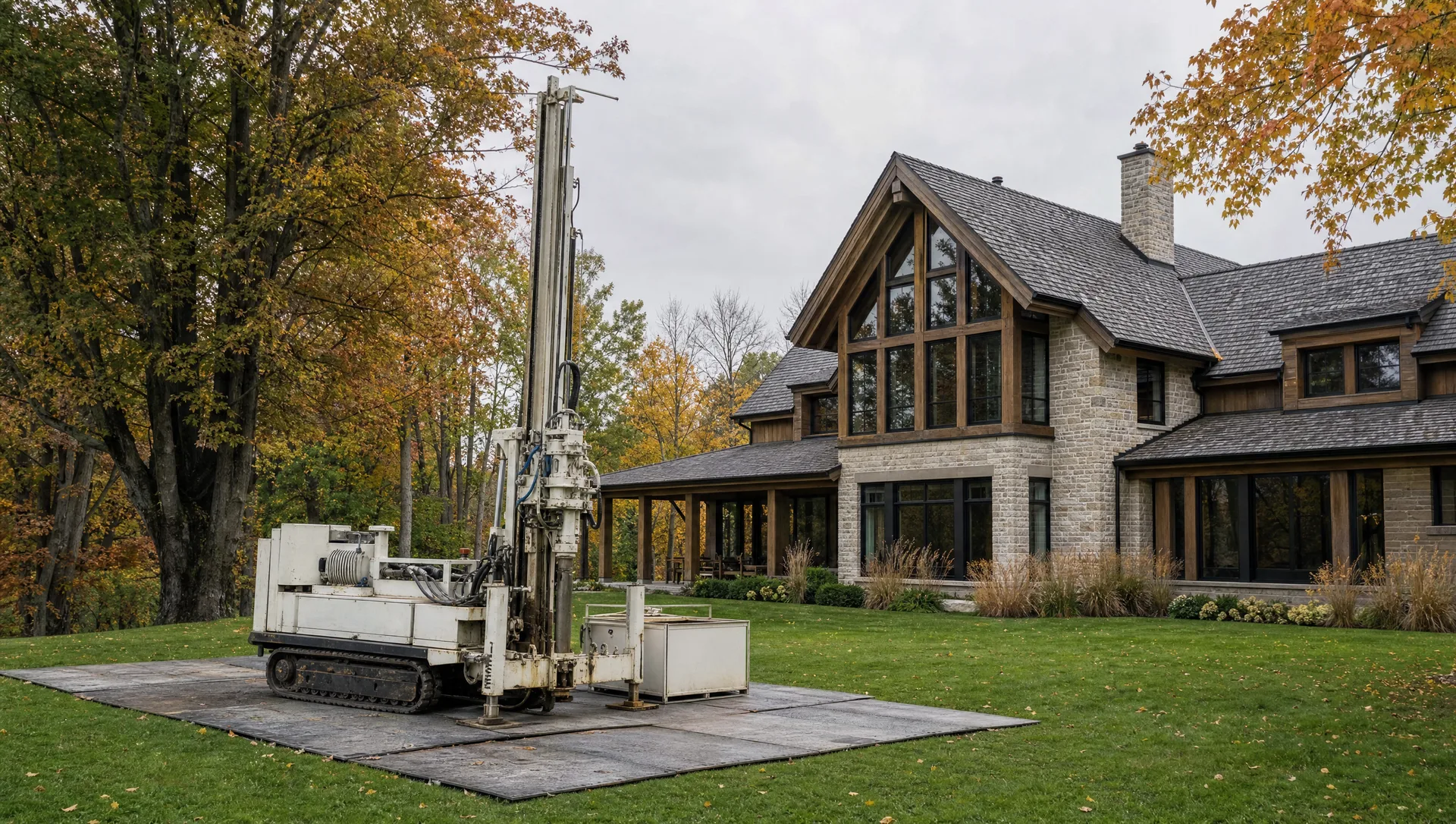
When there is no open land, the answer is vertical boreholes — or it is no. A drill rig needs a route in. Fences, mature trees and a side yard that will not take a mast change the job, and occasionally they end it. We would rather say no in the driveway than yes on a drawing that cannot be built.

The four loops

Your property picks the loop. We do not.

A company that only trenches will find a way to trench your lot. Most of what we install is horizontal, lake, or open well. Vertical is there when the lot is tight. One indoor machine either way.

Horizontal

Trenches, if you have the land

Pipe in long trenches, typically several metres down, then backfilled and reseeded. Cheapest loop when there is open, diggable ground. Loudest week of the job. If the yard is a garden you love, this is the wrong loop.

Vertical

Boreholes, if you do not

Narrow holes, hundreds of feet, a U-bend of pipe grouted in. Smallest surface scar. In Ontario a vertical closed loop can need an Environmental Compliance Approval; whether yours does is checked on the site visit, not guessed. That is part of a proper job — not a surprise after the rig arrives.

Lake / pond

Closed coils in the water

Nothing is taken from the lake. The same fluid goes round a sealed loop. Needs enough depth and the right permits. When the site allows it, it is the least invasive option we install.

Open well

Groundwater, where chemistry allows

Real well water through the heat pump, then returned. Can be the cheapest loop where yield and water quality are right. Iron, hardness and sediment are not theoretical — they foul equipment. We test before we promise.

Plain-language loop guide

What you can hold us to

Every unit ships with a way to check it.

  • No outdoor unit. Nothing on the wall to ice up, rattle, or get stolen.
  • An hour meter in the cabinet. Hours run times what an hour costs you is the real heating bill.
  • Helps heat your water while it runs when a desuperheater is fitted. Typical households save a substantial share of water-heating energy; it is not “free hot water.”
  • Repairable on purpose. Standard over-rated relays instead of proprietary boards. Any refrigeration wholesaler can supply a replacement.

The design philosophy

The failure mode this industry does not advertise

An undersized loop leans on backup electric heat all winter. That is where the horror stories about hydro bills come from — not “geothermal,” a loop that was never designed for the house. We size against a heat-loss calculation. If the lot cannot take the loop the house needs, we tell you before anyone digs.

Book the visit. Bring last year’s fuel bills if you have them.

We will walk the lot, look at the mechanical room, and tell you whether this is the right call — including when it is not.

Call 647-914-8114The line is answered — book a site visit now